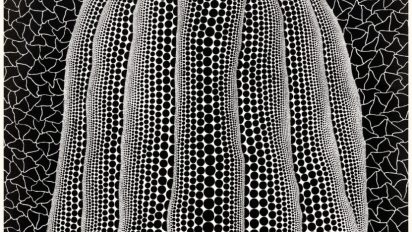
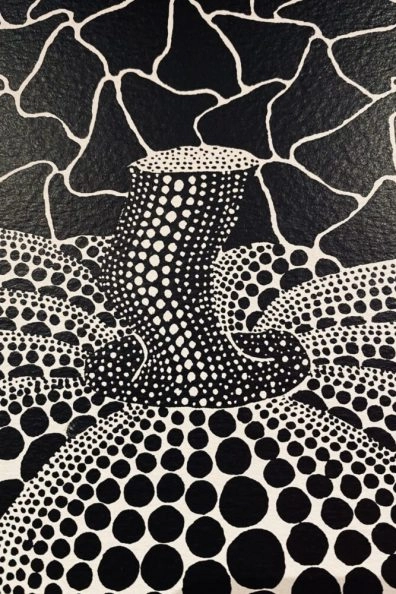
Visitors looking to experience Yayoi Kusama in Amsterdam can discover her works at Moco Museum Amsterdam as part of the museum’s Modern Masters collection.
At Moco Museum Amsterdam, Kusama’s work allows visitors to step into her visionary world and experience her art on a psychological and spiritual level. Displayed alongside leading artists such as Andy Warhol, Keith Haring, Damien Hirst, and KAWS, Yayoi Kusama in Amsterdam reveals how contemporary art can transform personal experiences into universal moments of reflection.
Kusama’s artistic journey began in her childhood in Japan, where she experienced hallucinations of flashing lights and fields of polka dots. These early visions became the foundation of her artistic language. Growing up in a strict family environment, Kusama’s artistic ambitions were not supported by her parents, leading her to rebel and forge her own path.
In 1957, at the age of 27, Kusama left Japan and moved to New York City, where she quickly became part of the avant-garde art scene alongside artists like Andy Warhol, Claes Oldenburg, and Donald Judd. Her innovative work in performance, sculpture, and installation gained international recognition, establishing her as one of the most influential female artists of the twentieth and twenty-first centuries.
Who is Yayoi Kusama?
Yayoi Kusama is one of the world’s most celebrated contemporary artists. Born in Matsumoto, Japan, in 1929, her career spanned more than seven decades creating paintings, sculptures, installations, performances, and immersive environments that explore infinity, repetition, and the relationship between the individual and the universe.
Today, experiencing Yayoi Kusama in Amsterdam has become synonymous with immersive contemporary art. Kusama is regarded as one of the most influential contemporary artists because she transformed deeply personal experiences into immersive artworks that changed how audiences engage with contemporary art. Her unmistakable visual language of polka dots, mirrored spaces, and pumpkins has inspired generations of artists while making contemporary art accessible to audiences around the world. Through deeply personal experiences transformed into universal artworks, Kusama invites visitors to reflect on identity, perception, and our place within an infinite world.
What is Yayoi Kusama known for?
Yayoi Kusama is best known for her Infinity Mirror Rooms, polka dots, pumpkins, Infinity Net paintings, and immersive installations. Long before immersive art became a defining museum trend, Kusama pioneered installations that invited visitors to physically enter the artwork itself.
Her work has become a defining force in contemporary art because it combines sculpture, painting, installation, performance, and psychology into experiences that are both visually spectacular and emotionally resonant.
Infinity Mirror Rooms
A defining feature of Yayoi Kusama’s career is her iconic Infinity Mirror Rooms. Using mirrored surfaces, light, and repetition, these immersive installations create the illusion of endless space, allowing visitors to feel as though they have stepped into infinity itself.
Kusama described these environments as moments of “self-obliteration,” where the boundaries between the individual and the universe dissolve. The reflective quality of the mirrors, combined with repeated lights and patterns, transforms the viewer into an active participant within the artwork.
Polka Dots
Polka dots have become Kusama’s unmistakable artistic signature. Appearing across paintings, sculptures, installations, and pumpkins, they represent repetition, obsession, meditation, and infinity. Through this simple visual language, Kusama transforms ordinary forms into extraordinary contemporary artworks.
Contemporary Art and Immersive Experiences
Yayoi Kusama has fundamentally changed how audiences experience contemporary art. Rather than simply observing a painting on a wall, visitors enter environments that engage the senses, emotions, and imagination simultaneously.
Her immersive installations continue to influence artists working across contemporary, digital, and experiential art today, demonstrating that art can be something we physically inhabit as much as something we observe.
The Power of Infinity and Self-Obliteration
Kusama’s concept of self-obliteration is central to her art. Through her famous polka dots and Infinity Nets, Kusama creates environments where the self dissolves into the infinite. Her work invites the viewer to experience both a sense of expansion and loss of identity, merging the self with the cosmos.
A key example of this theme is Kusama’s iconic Infinity Mirror Rooms. These immersive installations use mirrored surfaces to create a sense of endless space, where the viewer’s reflection becomes part of the artwork itself. Kusama described this process as “obliterating the self” and merging with the universe. The reflective quality of the mirrors and the repetitive patterns of dots and lights evoke a meditative experience, where the viewer is absorbed into the art.
Pumpkins
Yayoi Kusama’s pumpkins have become one of her most recognisable motifs. Although the collection rotates at Moco Museum Amsterdam, visitors can often experience examples of Kusama’s pumpkins, reflecting her deep connection to the vegetable, which she associates with warmth and comfort from her childhood.
Raised in a family of seed merchants, Kusama found pumpkins to possess a humorous and human-like quality. The repetitive dots she often covers them with represent both obsession and meditation, embodying Kusama’s lifelong artistic dialogue between control and chaos. Today, these pumpkin sculptures have become some of the most recognisable works in contemporary art.
The Universe
Kusama’s art is deeply connected to her fascination with the universe and the idea of endless space. Her Infinity Net paintings, composed of thousands of tiny, interwoven brushstrokes, evoke the texture of star fields and cosmic expanses. These works reflect Kusama’s attempt to visualise infinity and the dissolution of self within the vastness of the cosmos.
Her work also reflects her lifelong relationship with mental health. Kusama voluntarily checked herself into a psychiatric hospital in Japan in 1977, where she lived for the remainder of her life while continuing her artistic practice. Her art serves as both an emotional release and a form of therapy, allowing her to transform deeply personal experiences into artworks that resonate with audiences across cultures and generations.
Yayoi Kusama’s Influence on Contemporary Art
Yayoi Kusama’s influence extends far beyond her own artistic practice. She helped redefine contemporary art by demonstrating that painting, sculpture, installation, fashion, performance, and immersive environments could exist together as one artistic language.
Her pioneering approach has inspired countless artists working in immersive installations, public art, digital experiences, and conceptual art. Today, Kusama’s visual language continues to shape contemporary culture, proving that art can be simultaneously personal, participatory, and universal.
Her influence also extends beyond museums into fashion, design, and popular culture. Her collaborations with Louis Vuitton introduced her iconic polka dots to a global audience, demonstrating how contemporary art can move seamlessly between galleries and everyday life.
Artists Related to Yayoi Kusama at Moco Museum Amsterdam
Experiencing Yayoi Kusama in Amsterdam also offers an opportunity to discover other artists whose work has shaped modern and contemporary art.
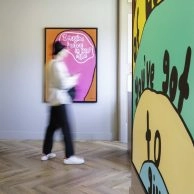
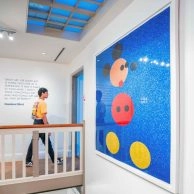
Andy Warhol transformed everyday consumer culture into Pop Art, while Keith Haring used bold visual language to communicate messages of equality and social change. Damien Hirst explores themes of life, mortality, and belief through conceptual artworks, and KAWS bridges contemporary art with popular culture through emotionally expressive sculptures and paintings. Like Andy Warhol, Keith Haring, Damien Hirst and KAWS, Yayoi Kusama helped redefine contemporary art by challenging traditional artistic boundaries.
Together, these artists demonstrate Moco Museum Amsterdam’s vision of presenting modern and contemporary art that challenges perspectives, sparks conversation, and creates meaningful emotional connections across generations.
Kusama’s Universal Impact
To experience Yayoi Kusama in Amsterdam at Moco Museum Amsterdam is to step into the mind of one of the world’s most visionary artists. Throughout her life, Kusama has challenged viewers to reconsider the boundaries between identity, space, perception, and reality.
Her work remains a powerful reminder that contemporary art can transform deeply personal experiences into universal ones. Through infinity, repetition, and immersive environments, Kusama continues to inspire millions of visitors around the world to look beyond themselves and imagine new ways of seeing.
Plan Your Visit to See Yayoi Kusama in Amsterdam
Yayoi Kusama’s works can be experienced at Moco Museum Amsterdam as part of the museum’s Modern Masters collection.
Experience Yayoi Kusama in Amsterdam at Moco Museum Amsterdam, where visitors can discover modern, contemporary, street, digital and immersive art in one curated museum experience. Whether you are discovering Kusama for the first time or revisiting one of the world’s most influential contemporary artists, every visit offers a fresh perspective through an evolving collection.
Plan your visit
- Location: Moco Museum Amsterdam
- Opening hours: Open daily. Please check current opening hours before your visit.
- Tickets: Book online through the official ticketshop or purchase on arrival, subject to availability.
- Good to know: Artworks on display may rotate as part of the museum’s evolving collection.
Exhibiting artists include






Reviews
Practical Information
-
Opening Hours
Monday – Sunday: 09:00 – 20:00
-
Duration
A visit to Moco Museum Amsterdam takes approximately 60 minutes.
-
Location
Honthorststraat 20, Museumplein (Museum Square). Next to the Van Gogh Museum.
Get directions via this link. Find a parking space at Q-Park Museumplein.
-
Contact
Email us at [email protected] or visit our contact page.
-
Audio Guide
Free audio tour, bring your headphones.
-
About
Moco Museum Amsterdam is an independent modern art museum presenting modern, contemporary, digital and immersive art by iconic artists including Banksy, Warhol, Basquiat, and Kusama, making art accessible and relevant.
-
Accessibility
Moco is housed in a protected historic building with narrow staircases. Unfortunately, wheelchairs, mobility scooters, strollers and buggies cannot be accommodated.
Media Reviews
-
 ForbesLocated in a sprawling mansion on Museumplein, Moco Museum brings together 20th-century legends like Dalí, Warhol, Keith Haring and Yayoi Kusama, alongside contemporary icons such as Banksy and Jean-Michel Basquiat. Skip the city’s big three art museums in favor of this small but jam-packed gem of modern art on Museumplein.
 -
 Harper’s BAZAARFrom Banksy to Basquiat and Keith Haring, Moco Museum brings together the biggest names in modern and street art - making it one of the best museums in Amsterdam. A must-visit for lovers of modern and street art, Moco Museum stands out among Amsterdam’s top cultural institutions. In our opinion, one of the best museums in Amsterdam.
 -
 Conde Nast TravelerOpened in 2016 by prominent local gallerists, Moco Museum continues to hog headlines, helped along by a magnificent setting in Villa Alsberg, a 1904 architectural beauty on Museumplein. With its heady mix of Pop Art and works by graffiti rock stars, Moco has enough contemporary swagger to make the neighboring Rijksmuseum and Van Gogh Museum quake in their old-school boots.
 -
 Amsterdam Local GemsPersonal experiences can vary, but many visitors find the museum surprisingly engaging. The atmosphere is relaxed, making it a great spot for both art aficionados and those just looking to enjoy something different.
 -
 TripadvisorWith a surprise at every corner and colourful, immersive art installations, Moco Museum is the perfect place to visit with family, and equally the perfect place to visit with friends.
Frequently Asked Questions
Who is Yayoi Kusama?
Yayoi Kusama is a Japanese contemporary artist born in 1929. She is internationally recognised for her Infinity Mirror Rooms, polka dots, pumpkins, and immersive installations that explore infinity, repetition, and self-obliteration.
What is Yayoi Kusama famous for?
Yayoi Kusama is famous for her Infinity Mirror Rooms, Infinity Net paintings, pumpkin sculptures, and her signature use of polka dots. Her work helped shape immersive contemporary art and continues to influence artists around the world.
Are there Yayoi Kusama artworks at Moco Museum Amsterdam?
Yes. Moco Museum Amsterdam regularly presents works by Yayoi Kusama as part of its Modern Masters collection. As the collection evolves, artworks on display may change over time.
Which Amsterdam museums feature Yayoi Kusama?
Visitors can experience works by Yayoi Kusama at Moco Museum Amsterdam. Other museums in Amsterdam may present Kusama through temporary exhibitions depending on their exhibition programme.
Where can I find exhibitions related to Kusama in Amsterdam?
If you are looking for Yayoi Kusama in Amsterdam, Moco Museum Amsterdam is one of the city’s leading destinations to experience her work alongside internationally renowned modern and contemporary artists.
Are there any Kusama art installations currently open to the public in Amsterdam?
Moco Museum Amsterdam regularly exhibits works by Yayoi Kusama. Because the museum’s collection evolves, visitors are encouraged to check the current exhibition programme before visiting.
What artists are similar to Yayoi Kusama?
Visitors interested in Yayoi Kusama often also enjoy discovering Andy Warhol, Keith Haring, KAWS, and Damien Hirst. Although each artist has a distinct artistic language, they all explore themes such as identity, repetition, popular culture, perception, and contemporary society.
What is an Infinity Room?
An Infinity Room is an immersive installation created using mirrors, lights, and repeated forms to create the illusion of endless space. Kusama’s Infinity Mirror Rooms invite visitors to become part of the artwork while exploring ideas of infinity and self-perception.
Why is Yayoi Kusama important in contemporary art?
Yayoi Kusama is considered one of the most influential contemporary artists because she pioneered immersive installations decades before experiential art became widespread. Her work has shaped contemporary art, installation art, fashion, design, and digital experiences through her distinctive visual language of repetition and infinity.
Experience Yayoi Kusama in Amsterdam
Step into the visionary world of Yayoi Kusama and discover how infinity, repetition, and immersive contemporary art continue to inspire audiences around the world.
Experience Yayoi Kusama alongside Andy Warhol, Keith Haring, Damien Hirst, KAWS, and other leading modern and contemporary artists at Moco Museum Amsterdam.